You can’t use WW2 Japan as an example.
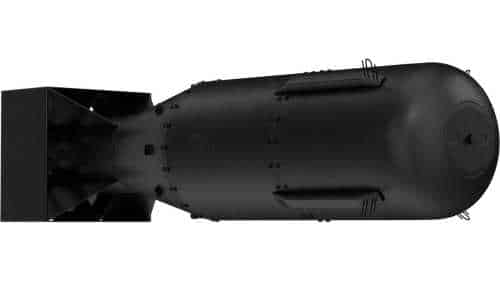
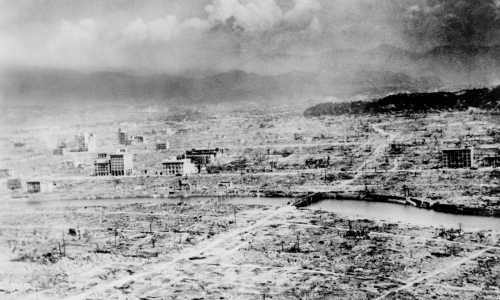
While the Hiroshima explosion is a good measuring stick, it was the first nuclear bomb dropped on a city, modern nuclear bombs are far more powerful than the one called Little Boy.
The fallout and destruction pattern of that bomb will give you the distance you need to be away from ground zero to survive a nuclear blast for a nuclear bomb of that size.
Sadly, most nuclear bombs since then are a minimum of 80 times more powerful than Hiroshima’s bomb.
It is a different story today should a nuclear detonation occur.
Read on to learn all you can on how to survive a nuclear blast.
How Close Can You Be to Survive a Nuclear Explosion?
Experts will give you different figures on the distance but those figures are not set in stone.
They can’t be as nuclear bombs vary in size.
And the one dropped on Hiroshima and Nagasaki would be mere pimples popping in comparison.
The survival range for a nuclear blast will depend on the size of the nuclear bomb dropped in any given area.
Topography may have something to do with preventing a nuclear blast from having devastating effects.
It is a well-known fact that nations prefer to detonate their nuclear bombs in the air as that provides the largest kill zone.

If the bombs are detonated on the ground, the explosion is absorbed by the earth and the kill zone shrinks.
One example may help you.
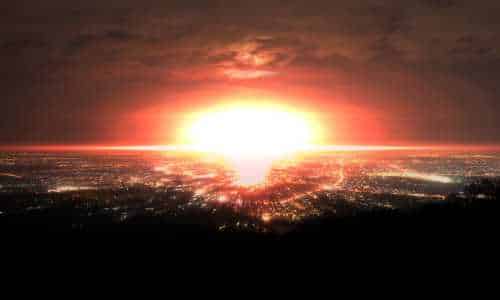
Imagine a 1-megaton nuclear bomb is dropped and detonated in the air.
It is estimated that people will suffer temporary blindness about 53 miles away from ground zero.
Those roughly 7 miles away would suffer from 3rd-degree burns.
While those 5 miles away would suffer 1st-degree burns.
There is no way to estimate how many people would die in those areas as there are still too many factors involved.
The 1-megaton bomb is the one that is only 80 times larger than the ones dropped on Hiroshima and Nagasaki.
There are much, much larger nuclear weapons held by 9 countries today.
Location does matter
This is one of those factors that may allow you to be closer to ground zero than your relatives are.
If you are on the surface then people are more likely to die from the effects of the bomb.
As well as any radioactive fallout that may come from the blast.
In terms of miles, it is hard to say but 10 may be the limit.
But if you are in an underground shelter, then you can be closer than that estimation.
Radiation has a hard time penetrating soil as do the blast effects, as well as the bright light and fallout.
A standard basement may be all the protection you will need in the outer rings of a nuclear blast.
But if you are at ground zero, there is nothing that will protect you.
Ground zero for a 10 KT or kiloton bomb, is about 1/2 a mile.
Only those people in:
+ subway stations
+ underground parking lots+
and similar buildings may survive, hopefully.
But if your home is 10 miles away from ground zero for this size of the bomb, then the most your home may suffer is some broken windows.
Those figures will change the greater the size of the nuclear bomb.
But the initial blast is not the only thing you have to worry about.
What about radiation?
Radiation is one of those long-reaching factors that kill more people than the initial blast.
If you are not killed at ground zero from the initial blast, chances are you will be killed by the radiation that is sent out by the bomb.
Of course, radiation’s reach depends on the size of the bomb.
In some of the small bomb sizes, you can protect yourself from its deadly effects with the right type of shielding.
That shielding can be made from:
- dirt
- stone
- brick
- water
- cement block
- and even layers of things like mattresses, pillows, and blankets.
The latter is not the best shields so they are a last resort.
What kills most people from the radiation fallout is the amount of time they spend in the radiated zone
The longer you are there, the worse it is for you as you come into more direct contact with radioactive materials.
It is hard to measure how far the radiation will reach as the weather plays an important role in the devastating effects of a nuclear blast.
First, put distance between yourself and the radiation very quickly.
Doi not spend a lot of time in that zone.
And have some good shielding.
Only then your chance to survive a nuclear blast will increase.
When Toxic fallout Arrives
Clean your pet if it was outside after the radioactive dust arrived.

Brush your pet’s fur gently to get rid of any radioactive dust, and if you have soap and water, wash your pet.
Stay hydrated and fed.
Food and drinks that were inside a building are safe to eat and drink.
If you were outside, you would want to get as far away as possible from the fallout.
Too much exposure in a short amount of time can hurt the body enough to make it less able to heal itself, fight infection, and do other things.
This is called acute radiation sickness, and it is a dangerous condition.
Keep yourself safe and remove and get rid of contaminated clothing immediately.
Follow the radiation safety rules of time, distance, and shielding during any radiation emergency.
Limit the amount of time you spend near a radioactive source.
Stay as far away as possible, and go deep inside a strong building to protect yourself from radiation.
Hundreds of thousands of people can be saved from radiation illness or death if they know what to do after an event like this.
The effects of a nuclear bomb
There are three more factor effects involved in a nuclear blast.
Again, we can only use the Japanese bombs as a guide.
You can magnify the following information per size of the bomb involved.
If you were standing 20 miles away from ground zero in Hiroshima, closed your eyes and put your arm over them, and your back turned to the blast, it is said you could see the bones in your arm.
You may not die but blindness is something to be concerned about.
Then there is the fireball and the kinetic energy and their effects, (they destroy everything in their path), which will also depend on the size of the bomb.
Expect total devastation from 1/2 mile on up to about 3 miles depending on the bomb size.
To be on the safe side, you need to be about 5 miles or more away from ground zero to expect to survive.
If you are between 3 to 5 miles away, being underground is your best chance for survival.
Those nuclear bomb shelter salesmen may be onto something.
The power of nuclear bombs
To give you an idea of how far away you should be from a nuclear blast, it is important to talk about the power of these bombs.
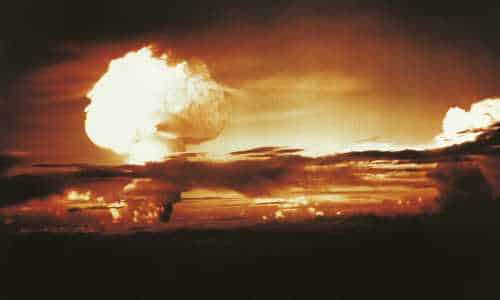
The Merriam-Webster Dictionary states that a joule is defined as “a unit of work or energy equal to the work done by a force of one newton acting through a distance of one meter”
To put it in easier terms to understand, a single joule “is about the amount of electricity used to light a one-watt LED for one second” (also from the M & W Dictionary).
When you extrapolate that to a 1-megaton bomb, the number of joules in the blast equals 4.184 petajoules.
In the numerical form that is 1,000,000,000,000,000 joules.
In other words, you do not want to be very close to ground zero.

Multiply that by 10 for a 10-megaton bomb and you will see that you have to be more than 20+ miles away from a nuclear blast to survive.
The largest nuclear bomb that has ever been set off is the 57-megaton Russian Tsar bomb.
If they sent that bomb to your country, your distance from ground zero needs to be multiplied by 57.
If 5 miles is safe for a 1-megaton bomb then 285 miles is safe for a 57-megaton bomb.
Finally, if more than one nuclear bomb is headed toward your country, there may not be a safe place to be.
And you may not want to survive as the radiation will destroy food and water supplies.
There is some good news…maybe
While the Hiroshima bomb was only 13 to 18 kilotons in size and the Nagasaki bomb was only 20 to 22 kilotons in size.
Modern nuclear weapons made after that were bigger and stronger.
That is not the good news.
The good news is that because delivery systems are far more accurate today than they were 70 years ago, nuclear bombs have gotten smaller.
What those delivery systems have done is lowered the power of the smaller nuclear bombs they deliver.
What this means is that those smaller bombs while double the size of the Japanese models, do not have double the power.
It is better to have two nuclear bombs dropped in an area than one big bomb.
The bad news is that it is much tougher to defend against multiple warheads delivered by the same missile.
You may survive these blasts as long as those two or four nuclear bombs do not land close to your area.
Then, that also means you may not have to be as far away from ground zero as you would for one big bomb.
But that may not be the case either as 4 bombs dropped in one area destroy more areas than one big bomb.
In other words, the possibility to survive a nuclear blast depends on many things.
Before You Go
There really is no good news when it comes to a nuclear blast, or worse still, a nuclear war
If you are fortunate enough to survive the nuclear blast, the fallout, radioactive material, and number of bombs detonated may make not surviving a better option.
While you are far enough away from the blast, make sure you have enough supplies to last a long time.
It may be a while before you can find or eat anymore.
Also, you never know where those bombs will hit, so moving may not be the ideal option either.

Originally posted 2023-03-15 05:14:52.