
Survival Psychology: Any event can lead to stress and, as everyone has experienced, events don’t always come one at a time.
Often, stressful events occur simultaneously.
These events are not stress, but they produce it and are called “stressors.”

Stressors are the obvious cause while stress is the response.
Once the body recognizes the presence of a stressor, it then begins to act to protect itself.
In response to a stressor, the body prepares either to “fight or flee.”

This preparation involves an internal SOS sent throughout the body.
As the body responds to this SOS, several actions take place.
The body releases stored fuels (sugar and fats) to: provide quick energy.
- Then breathing rate increases to supply more oxygen to the blood
- muscle tension increases to prepare for action
- blood clotting mechanisms are activated to reduce bleeding from cuts
- senses become more acute (hearing becomes more sensitive, eyes become big, smell becomes sharper) so that you are more aware of your surrounding and heart rate and blood pressure rise to provide more blood to the muscles.

This protective posture lets a person cope with potential dangers; however, a person cannot maintain such a level of alertness indefinitely.
Stressors are not courteous; one stressor does not leave because another one arrives.
Stressors add up.
The cumulative effect of minor stressors can be a major distress if they all happen too close together.
As the body’s resistance to stress wears down and the sources of stress continue (or increase), eventually a state of exhaustion arrives.
At this point, the ability to resist stress or use it in a positive way gives out and signs of distress appear.
Anticipating stressors and developing strategies to cope with them are two ingredients in the effective management of stress.
Survival Stressors
It is therefore essential that the soldier in a survival setting be aware of the types of stressors he will encounter.
Let’s take a look at a few of these.
Injury, Illness, or Death
Injury, illness, and death are real possibilities a survivor has to face.
Perhaps nothing is more stressful than being alone in an unfamiliar environment where you could die from hostile action, an accident, or from eating something lethal.
Illness and injury can also add to stress by limiting your ability to maneuver, get food and drink, find shelter, and defend yourself.
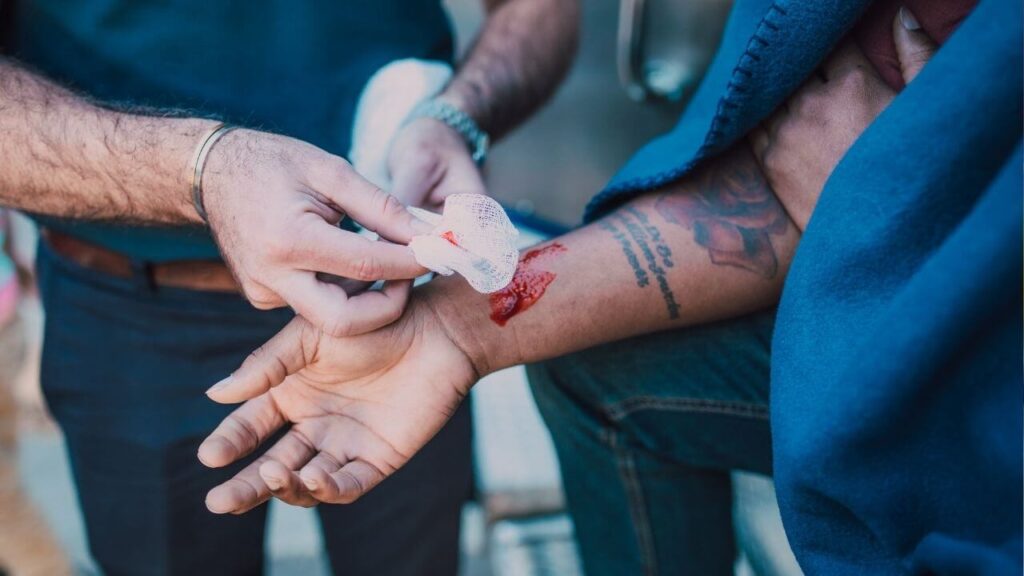
Even if illness and injury don’t lead to death, they add to stress through the pain and discomfort they generate.
It is only by con-trolling the stress associated with the vulnerability to injury, illness, and death that a soldier can have the courage to take the risks associated with survival tasks.
Uncertainly and Lack of Control
Some people have trouble operating in settings where everything is not clear-cut.
The only guarantee in a survival situation is that nothing is guaranteed.
It can be extremely stressful operating on limited information in a setting where you have limited control of your surroundings.
This uncertainty and lack of control also add to the stress of being ill, injured, or killed.

Environment
Even under the most ideal circumstances, nature is quite formidable.
In survival, a soldier will have to contend with the stressors of weather, terrain, and the variety of creatures inhabiting an area.

Heat, cold, rain, winds, mountains, swamps, deserts, insects, dangerous reptiles, and other animals are just a few of the challenges awaiting the soldier working to survive.
Depending on how a soldier handles the stress of his environment, his surroundings can be either a source of food and protection or can be a cause of extreme discomfort leading to injury, illness, or death.
Hunger and Thirst
Without food and water a person will weaken and eventually die.
Thus, getting and preserving food and water takes on increasing importance as the length of time in a survival setting increases.

For a soldier used to having his provisions issued, foraging can be a big source of stress.
Fatigue
Forcing yourself to continue surviving is not easy as you grow more tired.
It is possible to become so fatigued that the act of just staying awake is stressful in itself.
Isolation
There are some advantages to facing adversity with others.
As soldiers we learn individual skills, but we train to function as part of a team.
Although we, as soldiers, complain about higher headquarters, we become used to the information and guidance it provides, especially during times of confusion.
Being in contact with others also provides a greater sense of security and a feeling someone is available to help if problems occur.
A significant stressor in survival situations is that often a person or team has to rely solely on its own resources.
Survival Psychology: Final Words
The survival stressors mentioned here are by no means the only ones you may face.
Remember, what is stressful to one person may not be stressful to another.
Your experiences, training, personal outlook on life, physical and mental conditioning, and level of self-confidence contribute to what you will find stressful in a survival environment.
The object is not to avoid stress, but rather to manage the stressors of survival and make them work for you.
If you got some value from this post, then we’d love it if you shared it on Twitter.

Originally posted 2022-04-29 15:28:02.


