A well-stocked pantry can help you save money, reduce last-minute grocery store runs, and prepare for emergencies.
But you don’t need to spend a fortune to build a solid food reserve.
With the right strategy, you can stock up efficiently while sticking to a budget.
Here’s how to set up a DIY pantry.

Step 1: Set Your Pantry Goals
Before you start buying, take a moment to define your pantry’s purpose.
Your goals will guide what you buy and how much you store.
How to Define Your Pantry Needs
- Assess Your Storage Space – Take inventory of available cabinets, shelves, and storage bins. If space is limited, prioritize compact, high-nutrition items.
- Determine Your Stockpile Duration – Decide whether you want a two-week backup, a one-month supply, or several months’ worth of food.
- Consider Dietary Needs – List foods your family eats regularly. Avoid stocking up on unfamiliar items just because they’re on sale.
- Plan for Emergencies – Think about situations where your pantry would be your main food source, such as natural disasters, financial struggles, or supply chain disruptions.
Step 2: Choose the Right Foods
A smart pantry stockpile includes items that are versatile, shelf-stable, and cost-effective.
Focus on foods you already use in everyday meals.
How to Select the Best Staples
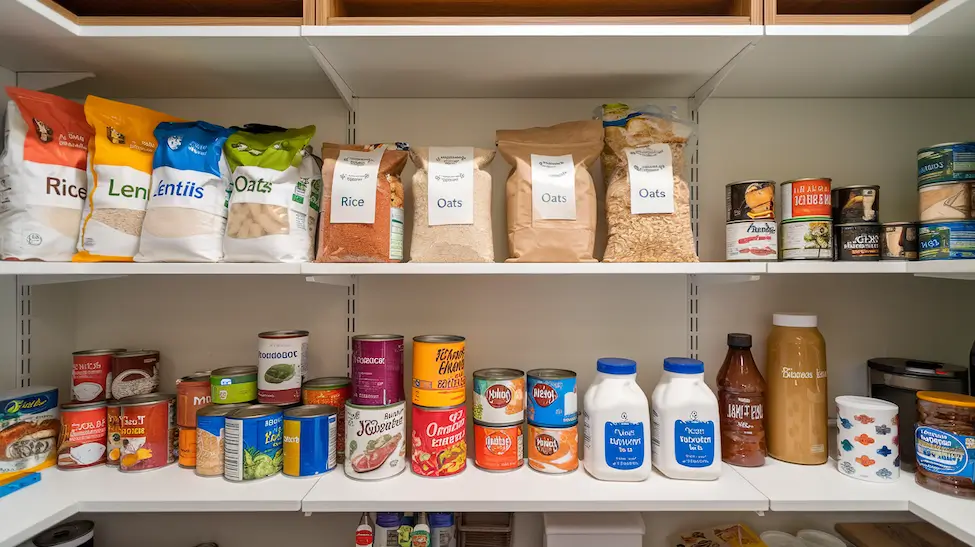
- Grains: Look for rice, oats, pasta, and flour. These can be bought in bulk and last a long time when stored properly.
- Proteins: Dried beans, lentils, canned tuna, peanut butter, and powdered eggs provide essential nutrients.
- Canned Goods: Stock up on vegetables, fruits, soups, and beans. Canned foods have a long shelf life and require minimal preparation.
- Dairy Alternatives: Powdered milk and shelf-stable plant-based milk are good substitutes when fresh milk isn’t available.
- Cooking Essentials: Salt, sugar, oil, and vinegar are necessary for cooking and food preservation.
- Snacks & Quick Meals: Keep items like crackers, granola bars, and nut butters for easy-to-grab options.
- Preserved & Frozen Foods: If you have freezer space, store frozen vegetables, meats, and homemade meals.
Step 3: Stock Up Without Overspending
You don’t need to buy everything at once.
Building a pantry over time helps spread out costs and ensures you only get what you actually use.
How to Build a Pantry on a Budget
- Start Small – Each time you shop, add one or two extra pantry staples to your cart. This method prevents overspending.
- Shop Sales and Bulk Deals – Look for store discounts, clearance items, and bulk purchases. Warehouse clubs often offer lower prices on non-perishable goods.
- Use Coupons and Cashback Apps – Many grocery stores have loyalty programs or digital coupons that can help lower costs.
- Opt for Generic Brands – Store-brand items are often just as good as name brands but cost significantly less.
- Buy in Bulk Smartly – Only buy bulk sizes if you will use them before they expire. Dry goods like rice and beans are great bulk options.
- Rotate Stock Regularly – Keep your pantry fresh by using the oldest items first. Label items with purchase or expiration dates.
Step 4: Organize Your Pantry for Easy Access
A disorganized pantry leads to wasted food and unnecessary purchases.
Keeping things neat ensures that you can quickly find what you need.
How to Organize Your Stockpile
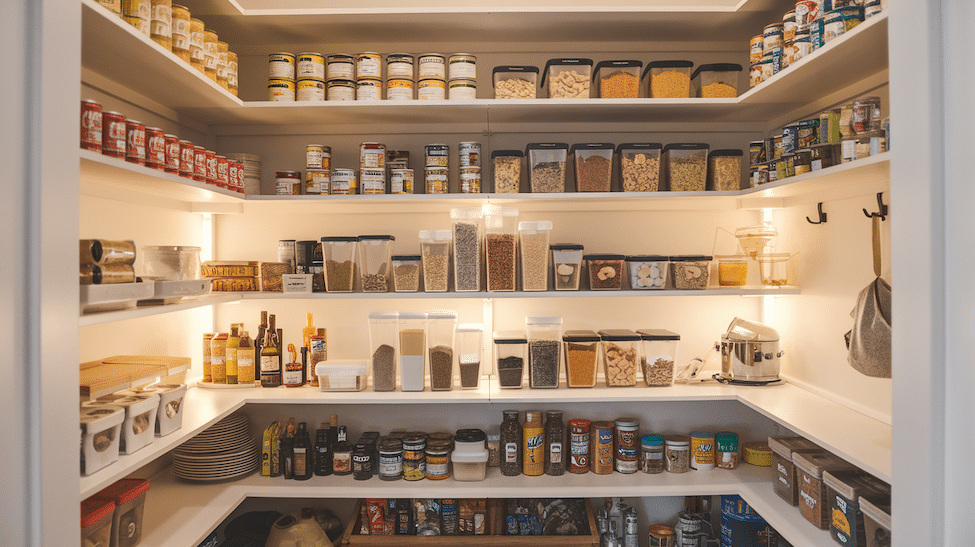
- Group Similar Items Together – Store grains in one section, canned goods in another, and snacks in a different area.
- Use Clear Storage Bins – Transparent containers make it easy to see what’s running low.
- Label Everything – Write expiration dates on canned goods and dry food packages.
- Follow the FIFO Rule (First In, First Out) – Always use older items before opening new ones.
- Store Heavy Items Low – Place large bags of rice or flour on lower shelves to prevent spills.
- Maximize Small Spaces – Use stackable containers, over-the-door racks, or under-bed storage for extra space.
Step 5: Plan Meals Around Your Stockpile
A pantry is only useful if you actually use it.
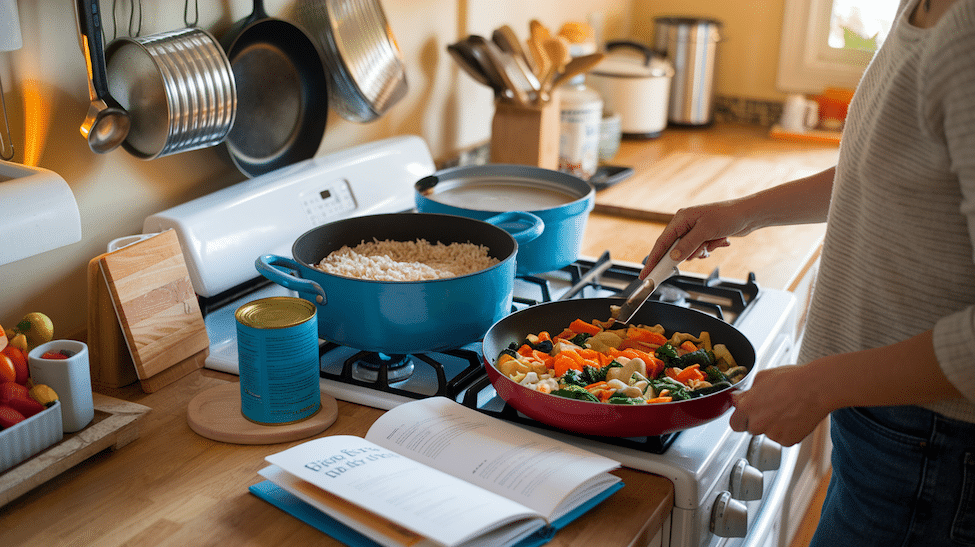
Planning meals around your stockpile helps reduce waste and makes grocery shopping easier.
How to Cook Using Your Stockpile
- Create a Meal Rotation – Write a list of meals you can make using your pantry staples. Rotate these meals throughout the month.
- Batch Cook & Freeze – Prepare large portions of meals and store leftovers for future use.
- Try New Recipes – Get creative with simple ingredients. Canned beans, rice, and spices can be turned into different types of dishes.
- Use Perishables First – If you have fresh ingredients, plan meals around them before they spoil.
- Keep an Inventory List – Track what’s in your pantry so you know when to restock.
Final Thoughts
A well-planned pantry stockpile doesn’t have to be expensive or take up too much space.
Start with a few key staples, stock up gradually, and organize your supplies for easy access.
Being prepared means having food security when you need it most.
Whether for daily convenience, financial challenges, or emergencies.
Take the first step today, and over time, your DIY pantry will become a reliable safety net for you and your family.

Originally posted 2025-02-14 02:40:37.